The Three-Page Afterthought
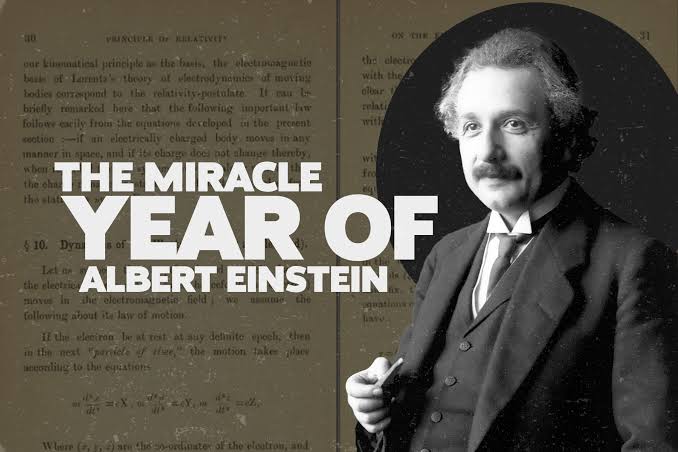
The last of the 1905 papers is the famous one, and it is barely a paper. It runs about three pages, contains no new physics, and follows entirely from the relativity paper Einstein had submitted three months earlier.
9 articles

The last of the 1905 papers is the famous one, and it is barely a paper. It runs about three pages, contains no new physics, and follows entirely from the relativity paper Einstein had submitted three months earlier.

Special relativity is usually taught as a response to the Michelson-Morley experiment. Physicists looked for the ether, failed to find it, and Einstein explained why.

The Brownian motion paper is usually presented as the one that proved atoms exist. That is roughly what it accomplished, but it badly misdescribes what Einstein was doing.

Einstein's photoelectric paper is the one that won him the Nobel Prize, and it's the only one of the 1905 papers he described as revolutionary.

Cordyceps became a household word through *The Last of Us*, and the premise the game builds on is roughly accurate as far as it goes: there is a fungus that infects insects, alters their behavior in specific and reproducible ways, and kills them in a location that benefits the fungus.

Oppenheimer is unusual among films about physics in that the physics is mostly correct and mostly load-bearing. It also compresses, reorders, and occasionally invents.

This paper has been cited well over 300,000 times, which for most of the last several decades made it the most cited paper in the scientific literature.

A quick thought on one of the strangest ideas in physics: particles sometimes show up where classical physics says they should not be able to go.

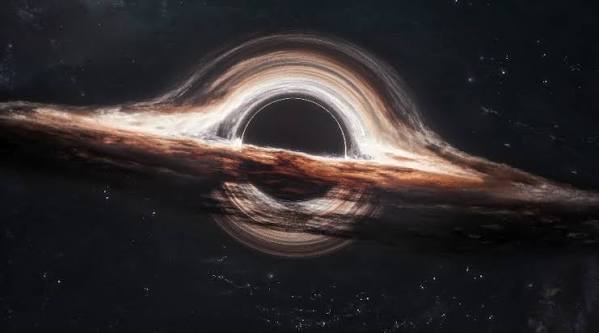
A very serious, very biased argument that Interstellar is the perfect mix of story, science, emotion, and cosmic weirdness.