Immunotherapy
Velocity Receptors Push CAR T Cells Deeper Into Solid Tumors
A lot of solid-tumor CAR-T work focuses on recognition. Can the cells find the antigen? Can they avoid exhaustion? Can they survive suppression? This paper does something different that I really liked: it asks whether the cells can physically move well enough to matter once they reach a collagen-rich tumor. That sounds basic, but in solid tumors it may be one of the main rate-limiting steps.
The Problem
CAR-T therapy has produced remarkable responses in hematologic cancers, but solid tumors are a different world. The paper argues that one major barrier is not just incorrect targeting or poor chemotaxis, but limited migration through the dense stromal matrix of the tumor microenvironment. The authors make an important distinction between chemotaxis and migration: a cell can be directionally guided and still be bad at actually traveling through tissue. If the engine is weak, steering does not help much.
Background Science
The authors began with a surprisingly simple observation. T cells embedded in three-dimensional collagen behaved differently depending on density. Low-density cells showed a low-motility phenotype, while high-density cells were much more migratory, with population-averaged migration increasing up to fourfold as density increased tenfold. Conditioned medium from high-density cultures could transfer that effect, which immediately suggested some secreted factor was involved. Single-cell proteomics then pointed to IL-5, TNFα, IFNγ, and IL-8 as candidate “velocity cytokines,” and blocking those signals or inhibiting JAK/STAT signaling reduced motility again.
What They Did
From there, the paper becomes an engineering paper in the best sense. The group designed synthetic “velocity receptors,” or VRs, that let mesothelin-targeted M5CAR T cells sense and exploit these motility-promoting cytokines. They considered a huge design space with more than 30,000 possible receptor combinations, then moved forward with five practical versions, including scFv-based receptors for IL-5, TNFα, and IL-8, plus additional IL-5 and IFNγ-based designs. These VRs were co-expressed with M5CAR in T cells using lentiviral transduction. The cells were tested in 3D collagen migration assays, activation and cytotoxicity assays, and then in NSG mouse models of pancreatic, lung, and ovarian cancer.
What’s New?
The conceptual advance is that the paper tries to engineer motility directly rather than treating infiltration as a downstream consequence of some other intervention. All five VRs increased migration of low-density M5CAR T cells to levels similar to or greater than high-density controls. In the pancreatic model, the best performer, V5-M5CAR, increased tumor infiltration by more than tenfold over control M5CAR cells. In the lung model, VR5aIL5-M5CAR increased infiltration by more than three hundredfold. In the ovarian model, both VR5aIL8-M5CAR and VR5aIL5-M5CAR produced months-long 100% overall survival, whereas M5CAR alone did not. The paper also reports minimal infiltration into kidney and pancreas and no significant weight loss in treated mice.
My Interpretation
This is one of the more creative CAR engineering papers I have read in a while because it reframes the problem at the level of cell behavior. Instead of only asking how to make CAR-T cells recognize more or signal harder, it asks how to make them physically better travelers. I find that really compelling. At the same time, I do not think this should be read uncritically. This is a bioRxiv preprint, it has not been peer reviewed, and all of the in vivo work was done in NSG mice, which are useful but limited for immune toxicity and microenvironment realism. The authors do show encouraging off-tumor and weight data, but that is not the same thing as a clinical safety package.
What I’d Do Next
I would want three things next. First, stronger toxicity modeling, ideally in settings that let the receptors interact with a more complete immune system. Second, direct comparison against other infiltration strategies such as chemokine receptor engineering or stromal-targeting combinations, because the field needs relative benchmarks, not just isolated wins. Third, I would want to know how these cells behave metabolically after gaining this motile phenotype. If you make CAR-T cells move harder and farther, do you also accelerate exhaustion, or does improved tumor access offset that cost?
Something I Learned
The distinction between migration and chemotaxis landed harder for me than I expected. It sounds like a semantic detail at first, but it is not. A therapeutic cell can know where the tumor is and still fail because it is mechanically bad at getting through tissue. That changed how I think about why solid-tumor cell therapies keep underperforming. Sometimes the problem is not recognition. Sometimes it is locomotion.
My Favorite Figure
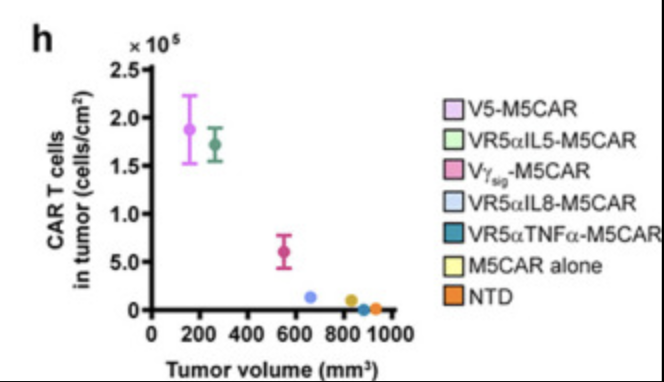
References
- Johnston AC, Alicea GM, Lee CC, et al. Engineering Self-Propelled Tumor-Infiltrating CAR T Cells Using Synthetic Velocity Receptors. bioRxiv preprint, posted 2024.