Immunotherapy
What It Means for a Living Drug to Last a Decade
CAR T cells get described as living drugs all the time, but I think we usually say that in a metaphorical way. The Melenhorst et al. paper makes it feel literal. It looks at patients with decade-long remissions after CD19 CAR T-cell therapy and asks what those long-lived remissions actually look like biologically. The answer is not just “a lot of CAR T cells.” It is a much stranger and more interesting story about persistence, clonal selection, and a durable CD4-dominant population.
The Problem
CAR T-cell therapy can produce dramatic remissions, especially in B-cell malignancies, but durability varies a lot. Some patients relapse because antigen is lost. Others relapse even when antigen is still there. And in some patients, the remission seems to last for years.
That raises a question that feels simple but is actually pretty deep: what kind of CAR T-cell state is associated with truly long-term disease control?
This is one of those questions where peak response is not enough. You need longitudinal biology.
Background Science
Early CAR T-cell discussion often focused on expansion kinetics. How high did the cells peak? How fast did they proliferate? Did they clear the tumor quickly?
Those are important measures, but they do not completely answer why some responses endure. Long-term immunity usually depends on persistence, self-renewal potential, and the ability to avoid terminal dysfunction. In conventional immunology, that means memory and durable cell states. In CAR T, it means we should probably care just as much about what kind of population remains after the initial wave as we care about the first burst of activity.
What They Did
This paper followed patients with chronic lymphocytic leukemia who had exceptionally durable remissions after anti-CD19 CAR T therapy. Rather than stopping at the clinical observation, the authors profiled the surviving CAR T-cell populations over very long time scales.
They found that the long-lived CAR compartment was not a random leftover population. It had distinctive features, including persistent CD4+ CAR T cells with cytotoxic characteristics. The work also linked durable persistence to specific transcriptional and phenotypic traits rather than to simple abundance alone.
That is what makes the study strong. It is not just a survival anecdote. It is a mechanistic follow-up on why the anecdote happened.
What’s New?
The biggest new idea is that long-term remission after CAR T therapy may be carried by a surprisingly specialized persistent population rather than by the short-lived bulk of the infused product.
That matters because it changes the therapeutic goal. Instead of only maximizing immediate expansion, we may need to optimize for the formation and survival of the right long-term population.
I also think the specific emphasis on persistent CD4+ CAR T cells is important. CAR T conversations often default to CD8-centric thinking because cytotoxicity feels easier to visualize there. This paper complicates that in a really useful way.
My Interpretation
I love this paper because it pushes CAR T therapy away from a simple “more is better” mindset.
It suggests that durability is less about brute force and more about lineage quality. The cells that matter most 10 years later are not necessarily the ones that looked most dramatic at the beginning.
That feels like a major design lesson. If a certain differentiated but persistent CD4-associated state is doing the long-term work, then manufacturing, selection, and engineering should probably care a lot more about preserving that biology.
This also makes cell therapy feel more like ecology again. The infused product is not fixed. It evolves. The question is which clones and states survive the selective pressures of the patient long term.
What I’d Do Next
I would want to know whether these long-lived features can be prospectively enriched before infusion.
Can manufacturing protocols bias toward the states associated with decade-long persistence? Can costimulatory domains, cytokine support, or metabolic profiling predict who is most likely to generate these durable populations?
I would also want to understand how general this biology is. These were extraordinary responders in a B-cell malignancy setting. Do the same persistence rules hold in ALL, lymphoma, or eventually solid tumors?
And the biggest practical translational question is whether we can measure the right early biomarkers. If durable remission depends on a specific evolving cell state, the goal should be identifying that state before relapse tells us we missed it.
Something I Learned
This paper made “living drug” feel less like a slogan and more like a real biological category.
A pill does not change lineages. A cell therapy does. It survives, contracts, persists, and evolves. That means the right mental model is not purely pharmacology. It is pharmacology plus population biology plus immunology.
My Favorite Figure
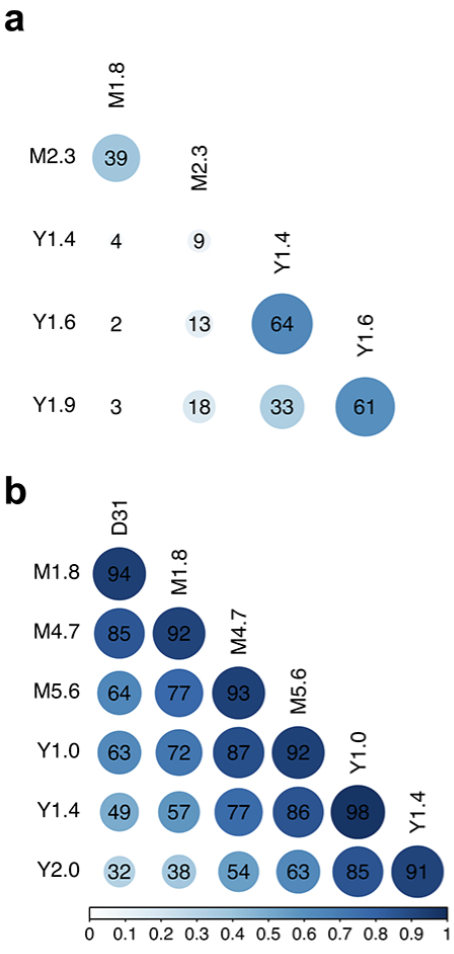
References
- Melenhorst JJ, Chen GM, Wang M, Porter DL, Chen C, Collins MA, et al. Decade-long Leukaemia Remissions with Persistence of CD4+ CAR T Cells. Nature. 2022.